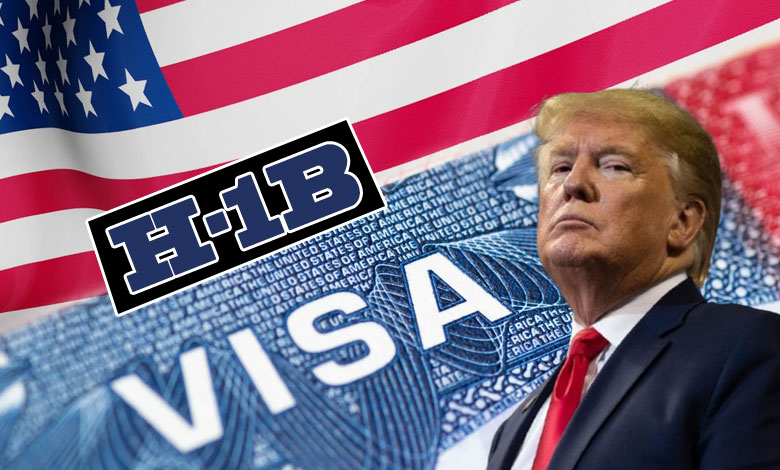
What the $100,000 Fee Means for the Future of the H-1B Visa
In a major shift for U.S. immigration and employment policy, Donald Trump’s administration has introduced a one-time $100,000 fee for new applications to the H-1B visa program, dramatically altering how U.S. companies hire highly skilled foreign workers.
Here’s a breakdown of what’s happening, why it matters, and what students should know:
What is the H-1B visa?
The H-1B visa allows U.S. employers to bring in foreign nationals to fill “specialty occupations” – jobs that require at least a bachelor’s degree (fields like engineering, computer science, research, and medicine). Traditionally, the fee for filling in an H-1B has been thousands of dollars (roughly $2000-$5000).
What’s new? The $100,000 fee.
As of September 21, 2025, any new H-1B application filed for a foreign national outside the U.S. must include the $100,000 fee. This fee does not apply to individuals who already hold an H-1B visa and are seeking renewals or extensions. In other words, the change applies to new filings. The administration describes this as a measure to protect American workers and ensure that overseas hiring under the H-1B is used appropriately.
Why this change?
According to the proclamation, the fee is intended to hold back alleged abuses of the H-1B system, such as using it to underpay foreign workers compared to U.S. counterparts, or replacing domestic workers with cheaper foreign labour. The policy also reflects a broader shift, placing greater financial burdens on employers who depend on foreign skilled workers, thus incentivizing them to hire or train U.S. workers instead.
Who is affected and how?
The new $100,000 H-1B visa fee affects a wide range of people and organizations, especially employers as well as foreign professionals. For many companies in the U.S., especially in technology, healthcare, and research fields, this new cost represents a major financial challenge. Large corporations may find it easy to afford the extra expense, but small businesses and start-up companies could potentially struggle to pay such a high fee for each new hire. As a result, many small businesses may decide to limit or completely stop hiring foreign workers; some might even move parts of their business overseas to find more affordable labour.
For foreign workers hoping to find jobs in the U.S., this change could make it much harder to get sponsorship from American companies. Since the fee is extremely high, many employers may become more selective or entirely avoid international hires. This means that there are going to be fewer job opportunities for skilled workers from other countries in certain fields. This policy could also make the U.S. a less attractive destination for international job-seekers, encouraging skilled professionals to seek opportunities in countries with more welcoming immigration policies. Universities and research institutions may also be impacted, as the new cost could make it more difficult for them to hire international academics and researchers.
Criticisms and Concerns
The $100,000 fee has sparked strong criticism from economists, business leaders, and immigration advocates. Many people argue that the policy exceeds the authority of the executive branch, as only Congress has the power to set visa fees. Traditionally, visa fees are intended to cover processing and administrative costs, not to act as a penalty or financial barrier. Some believe that this new rule turns the H-1B visa system into a tool for restricting immigration rather than managing it fairly.
Economists have also raised concerns about the long-term impacts of the fee on the U.S. economy. They warn that by making it harder and more expensive for companies to bring in skilled foreign workers, the policy could also innovate and weaken America’s leadership in technology, science, and business fields. Some experts say that industries such as healthcare could suffer as well, especially in rural areas that rely on international doctors and specialists. Critics argue that this rule could reduce international collaboration, decrease workforce diversity, and discourage talented individuals from choosing to work or study in the U.S..
What does this mean for students and future job-seekers?
For students and young individuals preparing for their future careers, this policy is very important to understand as it could alter the global job market. Students who are studying in STEM fields, such as science, technology, engineering, and math, often look to the U.S. for work experiences or opportunities after graduation. However, with this new $100,000 fee policy, many companies may be less willing to sponsor international workers, which could make it increasingly difficult to find jobs in the U.S.. This means that all students should carefully consider their career plans, and remain open-minded towards alternate countries or paths.
Simultaneously, this policy might lead American companies to hire more domestic workers, opening up newer opportunities for U.S. citizens in high-demand fields. Students studying in the U.S. may be benefited if companies begin to invest more in local training and talent development. However, many international students may find it challenging to stay and work in the U.S. after finishing their studies due to reduced visa opportunities. In both cases, it is becoming increasingly important for students to focus on building strong skills, gaining experience, and exploring multiple career options around the world.
What happens next?
The story of the $100,000 H-1B visa fee is still unfolding. Several major business organizations, including the U.S. Chamber of Commerce, have already filed lawsuits challenging the rule. They argue that the fee is unlawful and harms both American companies and the U.S. economy. These legal challenges could delay or even prevent the policy from taking full effect. For now, this rule is expected to remain in place for at least another year, but future governments could revise or even cancel it.
In the meantime, companies are adapting to the change in several different ways. Some are cutting back on international hiring, while the others are turning to automation or moving operations to countries with friendlier immigration systems. Foreign workers are also re-assessing their options, with many looking to Canada, Europe, or Australia as their alternatives. The coming months will reveal whether the policy fulfills its goal of protecting American jobs or ultimately undermines innovation and global competitiveness.
Resources:
- Reuters. “Major U.S. Business Group Sues over Trump’s $100,000 H-1B Visa Fee.” Reuters, 16 Oct 2025, https://www.reuters.com/world/major-us-business-group-sues-over-trumps-100000-h-1b-visa-fee-2025-10-16/
- Associated Press (AP News). “U.S. Chamber of Commerce Sues Trump Administration over $100,000 H-1B Visa Fee.” AP News, 16 Oct 2025, https://apnews.com/article/7b6097bc44d6c0aff86fbe6f43dae7af
- The Guardian. “Trump’s $100,000 H-1B Visa Fee Could Hurt US Growth, Economists Warn.” The Guardian, 22 Sept 2025, https://www.theguardian.com/business/2025/sep/22/trump-h-1b-visa-fees-us-economy-tech-india
- The White House. “Proclamation on Restriction on Entry of Certain Nonimmigrant Workers.” Whitehouse.gov, 21 Sept 2025, https://www.whitehouse.gov/presidential-actions/2025/09/restriction-on-entry-of-certain-nonimmigrant-workers/
- Boundless Immigration. “Trump Administration to Propose New $100,000 Fee for H-1B Visa Applications.” Boundless.com, Sept 2025, https://www.boundless.com/blog/trump-administration-to-propose-new-100000-fee-for-h-1b-visa-applications
- Stateline (Pew Charitable Trusts). “Trump’s New $100,000 Visa Fee Could Worsen State Doctor Shortages, Experts Say.” Stateline.org, 16 Oct 2025, https://stateline.org/2025/10/16/trumps-new-100k-visa-fee-could-worsen-state-doctor-shortages-experts-say/
- San Francisco Chronicle. “H-1B Visa Fee under Trump Puts Tech Hiring at Risk.” SF Chronicle, Oct 2025, https://www.sfchronicle.com/us-world/article/h1b-visa-trump-work-job-21102258.php
- Times of India. “Harvard Could Face $100,000 Fee for Every New H-1B Worker under Trump Proclamation.” Times of India, Oct 2025, https://timesofindia.indiatimes.com/education/news/harvard-could-face-100000-fee-for-every-new-h-1b-worker-under-trump-proclamation/articleshow/124042227.cms
- Economic Times (India). “TCS Reduces H-1B Usage, Aligns with U.S. Push for Local Hiring.” The Economic Times, 17 Oct 2025, https://m.economictimes.com/nri/work/tcs-reduces-h-1b-usage-aligns-with-us-push-for-local-and-high-skilled-hiring/articleshow/124520337.cms
- American Immigration Council. “The H-1B Visa Program: Facts, History, and Policy.” American Immigration Council, 2024, https://www.americanimmigrationcouncil.org/